
Lab Weekly - 11/26/2025
AI commerce updates; Plus, the latest news from TikTok, Prime Video, and more must-know news and stats

Want this newsletter in your inbox every week? Sign up for our mailing list here

Editor’s Note: Since it’s a short work week in the U.S. due to Thanksgiving, we’re swapping our usual long-form Lab original for a roundup of the latest stories and stats in AI commerce as we head into the holiday shopping season. We hope you enjoy!
In case you missed it…
How the $38 Billion Visa and Mastercard Settlement Changes the Game
New rules may trim fees and expand surcharges, with merchants testing which card categories they accept and consumers adjusting habits
The Future of Healthcare: How Consumers are Rewriting the Care Journey
The rise of the DIY Health Optimizer, along with a new class of AI Health Advisors
From Prediction Markets to Labubus, Everything is Gambling Now
Why people are betting on just about everything, and how brands can respond


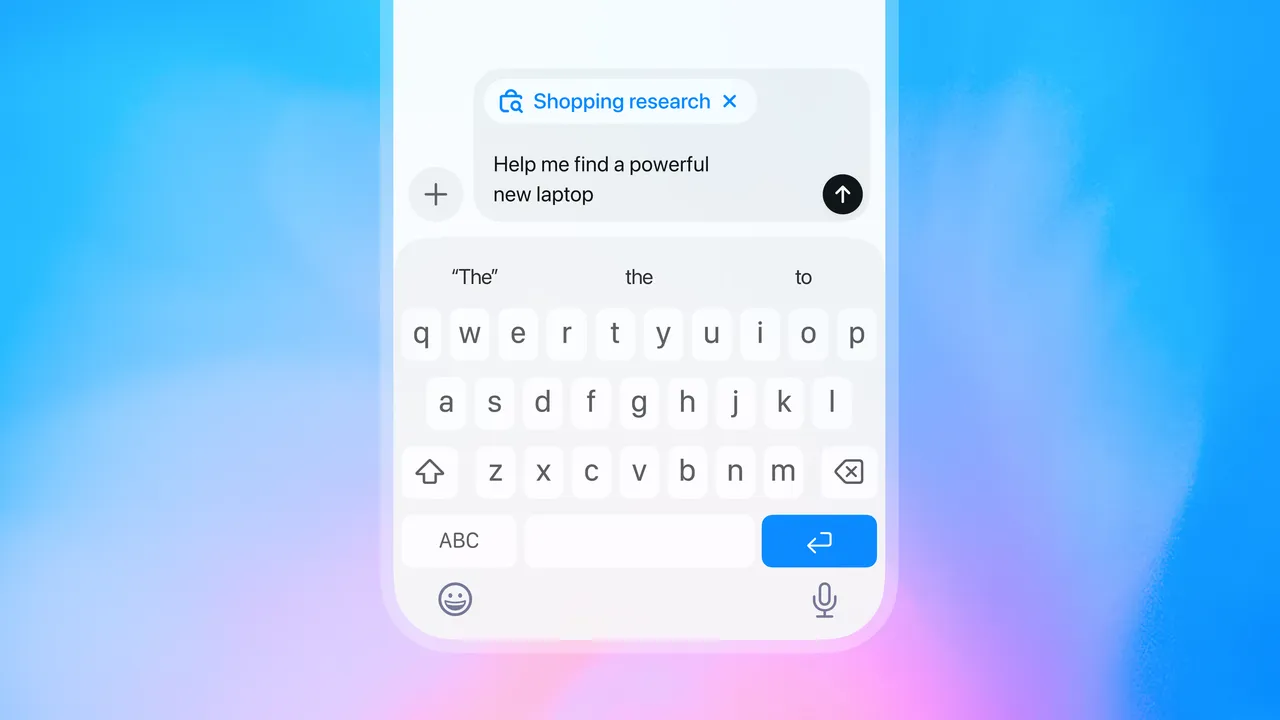
OpenAI Unveils Free Shopping Research Feature in ChatGPT [ZDNet]
OpenAI’s new Shopping Research aims to turn ChatGPT into a free “expert personal shopper,” blending deep web-scraping, reviews, and Tinder-style swipe feedback into a shoppable recommendation engine, powered by a version of GPT-5-mini that was trained specifically for shopping tasks.
Obviously, it won’t replace the thrill of the hunt for die-hard shoppers, but it does lower the friction for everyone else trying to hit a budget and a vibe before checkout. For brands and retailers, this is another nudge toward “AI-native” discovery. For now, OpenAI says it won’t prioritize certain retail websites over others, focusing instead on surfacing the best products that fit the user’s criteria.
Yet, history suggests “neutral” shelves rarely stay that way once ad dollars get involved. Brands should assume the next frontier after SEO is “LLM optimization,”starting with making sure their products are structured, reviewed, and visible enough that they’re not left off the list when the AI chatbots start picking suggestions.
Related: OpenAI rolls out ChatGPT group conversations [The Verge]; Google launches AI-powered shopping features in the US [The Verge]
Target to Launch ChatGPT App with Multi-Item Baskets, Fresh Food [Marketing Dive]
Target is deepening its work with OpenAI as consumers continue to turn to AI chatbots for shopping support. By allowing shoppers to link their accounts directly to the ChatGPT app for “personalized recommendations” and even complete purchases, Target is essentially turning the AI chatbot into a proactive shopping agent.
This move effectively bypasses the traditional in-app or website experience, suggesting that Target sees significant value in meeting the customer where they are. While the initial features focus on basic transactions and recommendations, the promise of soon adding Target Circle benefits and same-day delivery fulfillment shows a commitment to making this a holistic, competitive shopping channel.
For marketers, it’s another sign that AI interfaces are becoming new storefronts where the endcap isn’t an aisle; it’s whichever products the model decides to surface first. The industry will be watching to see whether other major retailers follow Target’s lead or leave it with a true first-mover edge.
Related: Airbnb will test adding Instacart grocery delivery to its app [Bloomberg]; OpenAI and the race for AI-driven commerce [TechCrunch]
Google Debuts Gemini 3 Pro Model [The Verge]
Google launches Gemini 3, its “most intelligent” and “factually accurate” model yet, better at coding and reasoning, and trading “flattery for genuine insight.” Google says Gemini 3 Pro is available in the Gemini app, which now has 650 million MAUs, up from 350 million in March. Moreover, it also now powers Google Search’s conversational AI Mode.
Early hands-on reviews have found it to be a fundamental improvement on daily use, with fast responses and a terse and direct personality. The latter stands in contrast to the ChatGPT-5.1 model, which was marketed as a warmer, friendlier model by OpenAI. By all accounts, Gemini 3 is topping leaderboards and wowing rivals, but users aren’t dropping other models just yet.
As the two previous retail-related updates show, the quality of the user interface, along with the specific use cases of AI chatbots, will have far more bearing on consumer adoption than having the most cutting-edge model. After all, a model that is 10% smarter doesn’t change behavior; a model that saves 5 clicks does. The same is applicable for AI commerce as well.
Related: Google launches Nano Banana Pro, an updated AI image generator powered by Gemini 3 [CNBC]; Gemini 3 is topping leaderboards and wowing rivals, but users aren’t dropping other models just yet [The Verge]
Situational Awareness:
TikTok Shop pushes into luxury retail with $11,000 handbags [Bloomberg]
TikTok Shop is expanding into luxury retail, offering items such as Hermes’ $11,000 handbags, primarily sold by secondhand resellers using AI to verify authenticity. This could be a double-edged sword for luxury brands: it opens a new channel to sell directly to younger shoppers, but with even less control over where and how their products show up.
Amazon launches a Video Recaps feature on Prime Video [Variety]
Amazon’s new AI-powered Video Recaps are basically the “previously on” reel outsourced to an algorithm, stitching together key plot beats, clips, and music for Prime Video viewers in the U.S. For audiences, it’s a time-saver; for Amazon, it’s another test of how far AI can shape the viewing experience without breaking immersion or spoilers. Marketers should take this as another signal pointing towards the future of hyper-personalized, AI-edited storytelling delivered through digital platforms.
Character AI will offer interactive ‘Stories’ to kids instead of open-ended chat [TechCrunch]
Character AI, a startup famous for making companion AI chatbots, is taking some drastic measures to improve its child safety. This new interactive story feature is rolling out after the company cut off access to ongoing chats for users under 18 over mental-health concerns, after adding a two-hour daily limit on October 29. It will be interesting to see if more AI companion providers follow suit and limit the ability of underage users to chat with AI chatbots.
JPMorgan Chase wins fight with fintech firms over fees to access customer data [CNBC]
JPMorgan Chase, the biggest U.S. bank by assets, has secured deals ensuring it will get paid by the fintech firms responsible for nearly all the data requests made by third-party apps connected to customer bank accounts. The bank backed off its initial pricing, while aggregators secured some servicing concessions, which serves as a reminder that even in “open banking,” toll booths are negotiable. For marketers, it’s another signal that access to high-quality financial data is becoming less about scrappy integrations and more about who can afford premium pipes.

AI shopping agents are already deciding what consumers buy. A recent Kearney report found that 73% of consumers have used AI tools at least once (somewhat or very familiar), and 60% of consumers are moderately to extremely likely to try AI agents for shopping.
A handful of retailers raised their sales forecasts for the year on Tuesday, Axios reports, saying they’re well-positioned heading into the holiday season. For example, Abercrombie & Fitch said sales grew 7% last quarter, with surging sales at its Hollister brand allowing it to raise the low end of its full-year sales outlook.
Alibaba’s Qwen app drew more than 10 million downloads, mainly in China, in the week after its relaunch, Bloomberg reports, underscoring how AI apps have been rapidly adopted in recent years. Alibaba reportedly plans to deeply integrate core lifestyle and productivity services into the Qwen App.

If you find our insights valuable and would like to have a deeper conversation on technology and media innovations, or need to sound smarter in a client meeting or a pitch, please feel free to reach out to Ryan Miller, our Director of Partnerships, at ryan.miller@ipglab.com.
If you liked this edition of Lab Weekly by IPG Media Lab, why not share it?