
Lab Weekly - 10/11/2024
Social Commerce & Chinese shopping apps; Plus, the latest news on Meta, Amazon, & more must-know stories and cool stats

Want this newsletter in your inbox every week? Sign up for our mailing list here

Shop As You Scroll: The Future of Social Commerce
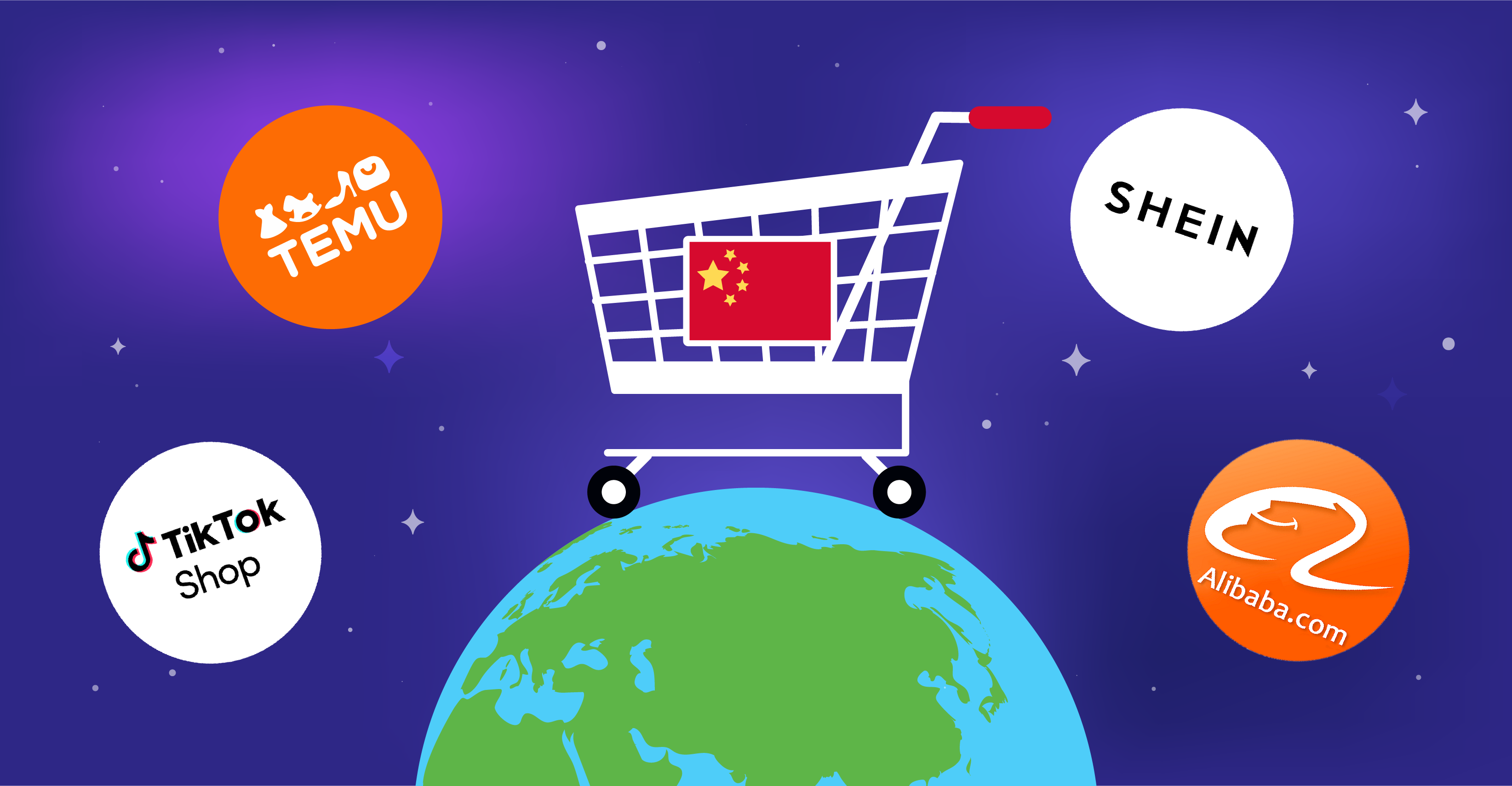
After a decade of thwarted efforts and false starts, a new wave of social commerce innovations has emerged to convince Americans to shop where they scroll. This is partly thanks to the aggressive push of Chinese ecommerce apps, such as Shein and Temu, into the U.S. markets, and the corresponding responses from American competitors. Here’s what marketers need to know.
In case you missed it…
Meta Previews the Future of AR — Here’s What It Means for Brands
Meta maps a clear vision for the post-mobile future; Whether it can pull it off is an entirely different question. Regardless, smart brands should start future-proofing for a post-mobile computing paradigm today.
What Apple’s New “Visual Intelligence” Means for Brands
Apple announced its latest product updates on Monday via a pre-recorded keynote video. Indeed, despite it being a hardware event, the real star of the show is undoubtedly the set of AI-powered features that Apple is set to unleash with the new iPhone models.
The State of Mobile AR
Given the recent development in AR wearables, it’s easy to get distracted by these shiny new gadgets and forget that the vast majority of consumers still interact with AR experiences through mobile devices today.


Meta Announces Movie Gen, An AI-powered Video Generator [The Verge]
Meta has introduced its latest AI video generator, capable of creating high-definition, up to 16-second-long video from text prompts, and modifying existing footage with AI-generated sound and visual effects. While powerful, Meta says Movie Gen is not yet ready for public release due to high costs and long processing times, but plans to add it to its apps in 2025
The launch comes amidst increased competition from major players like OpenAI, which introduced its text-to-video model, Sora, earlier this year, but has yet to make it publicly available. However, with Meta starting to integrate AI into video ad tools to help with the creative process, Meta advertisers may soon get hands-on experience with features powered by Movie Gen.
Brands could use AI to produce personalized ad creatives at scale, adapting content to different audiences without the need for large production budgets. This flexibility is particularly valuable for brands targeting diverse markets or testing multiple creative variations. But, concerns about copyright, ethics, and the impact on creative industries persist as AI advances, and brands should proceed with caution.
Related: Meta introduces generative AI video advertising tools [AdWeek]; TikTok launches Smart+, a new AI-powered ad tool that automates ad targeting and optimization [Digiday]
Amazon Wants AI to Do Your Shopping for You [Wired]
Amazon is exploring the idea of autonomous AI agents that will do the shopping on behalf of customers. The company is currently rolling out AI-generated shopping guides and experimenting with chatbots like Rufus, which can recommend products and potentially even make purchases based on user preferences. Amazon believes that eventually AI agents could transform ecommerce by providing highly personalized shopping experiences and automating routine consumer decisions, and it is building towards that goal.
Amazon's strategy highlights the growing trend of retailers leveraging AI to offer hyper-personalized experiences, optimize product recommendations, and streamline purchasing processes. As AI takes a more active role, companies will need to address consumer concerns around data usage, control over purchases, and potential overreach. Ultimately, the success of these AI agents will hinge on user acceptance, making it crucial for them to provide value without becoming intrusive.
Related: Amazon unveils AI tool to help drivers find packages faster [Bloomberg]; Walmart bets on multiple AI models with new Wallaby LLM [VentureBeat]
Amazon To Expand Same-Day Prescription Delivery Service In 2025 [CNBC]
Besides building an AI shopping agent, Amazon also announced it is expanding its same-day prescription delivery service to 20 additional cities in 2025, aiming to cover nearly half of the U.S. and further establishing its footprint in healthcare. The service, part of Amazon Pharmacy, leverages the company’s network of same-day delivery facilities and offers free delivery for Prime members.
As traditional pharmacies like CVS and Walgreens close locations and create "pharmacy deserts," Amazon is capitalizing on these gaps to offer more accessible medication delivery options. This move is part of Amazon’s broader strategy to disrupt healthcare, marked by its 2022 acquisition of One Medical and other forays into telehealth and wellness programs.
The entry of Amazon into the pharmacy space is reshaping consumer expectations around convenience and price transparency. By integrating healthcare with its logistics prowess, Amazon is well-positioned to become a major player in the sector, but it still must navigate challenges around regulation, data privacy, and patient trust.
Related: CVS pilots program that lets shoppers unlock display cases with their phones [Retail Brew]; Google cuts ties with Amazon’s One Medical [Business Insider]
Situational Awareness:
Vision Pro’s first scripted immersive film is coming this week [9to5Mac]
Apple has been slowly ramping up its Immersive Video content library, which now includes new series Boundless and Elevated, a Super Bowl LVIII short, and the Paris-set Parkour. It will be interesting to see if any of them become compelling enough to move the needle and spur wider adoption of Vision Pro, or at least the more affordable version when that comes out.
Substack wants to do more than just newsletters [Semafor]
Good luck with this plan of essentially trying to directly compete with Patreon, especially with its higher commission rate. (Substack takes a 10% cut of payments to creators whereas Patreon takes 8%.) Also, trying to convince a bunch of content creators and podcasters who are not necessarily good writers to join a creator platform synonymous with newsletters is a delicious irony and a bad branding practice.
Plumerai pushes tiny AI models and on-device processing for secure smart homes [TechCrunch]
Plumeria is touting privacy, cost-efficiency, and less reliance on the cloud infrastructure, which are limitations of existing systems. It aims to increase Gen AI use in smart home products so as to enable new features and unlock better user experience.
US government considers a breakup of Google [CNN]
A federal judge ruled that Google illegally maintained its monopoly in search and search text advertising, leading the Department of Justice to propose remedies ranging from banning default search deals to potentially breaking up the company. But like any big case, it will entail a long process, with a hearing in April 2024 and a ruling by August, followed by likely appeals that could go all the way to the Supreme Court. So, for the time being, it’s still business as usual for Google.

Adult TikTok users in the U.S. use the platform to follow pop culture and entertainment accounts much more than news and politics, per a new Pew Research Center analysis of the accounts Americans follow on TikTok. Among the accounts they follow, 59% post pop culture & entertainment content, compared to the 10% that focus on political content and 5% on news. Moreover, 46% of them are mid-tier influencers & creators (5,000 to 1 million followers), whereas small accounts (fewer than 5,000 followers) make up another 38% of what Americans follow on TikTok.
A new Spotify report offers more statistical evidence that Gen Z craves connection and in-person experiences, WWD reports. 74% of Gen Z polled said they have attended concerts or a live show in the last year, and 49% of them said that “a brand sponsoring live music events or concerts would make them more likely to buy that brand in the future.”
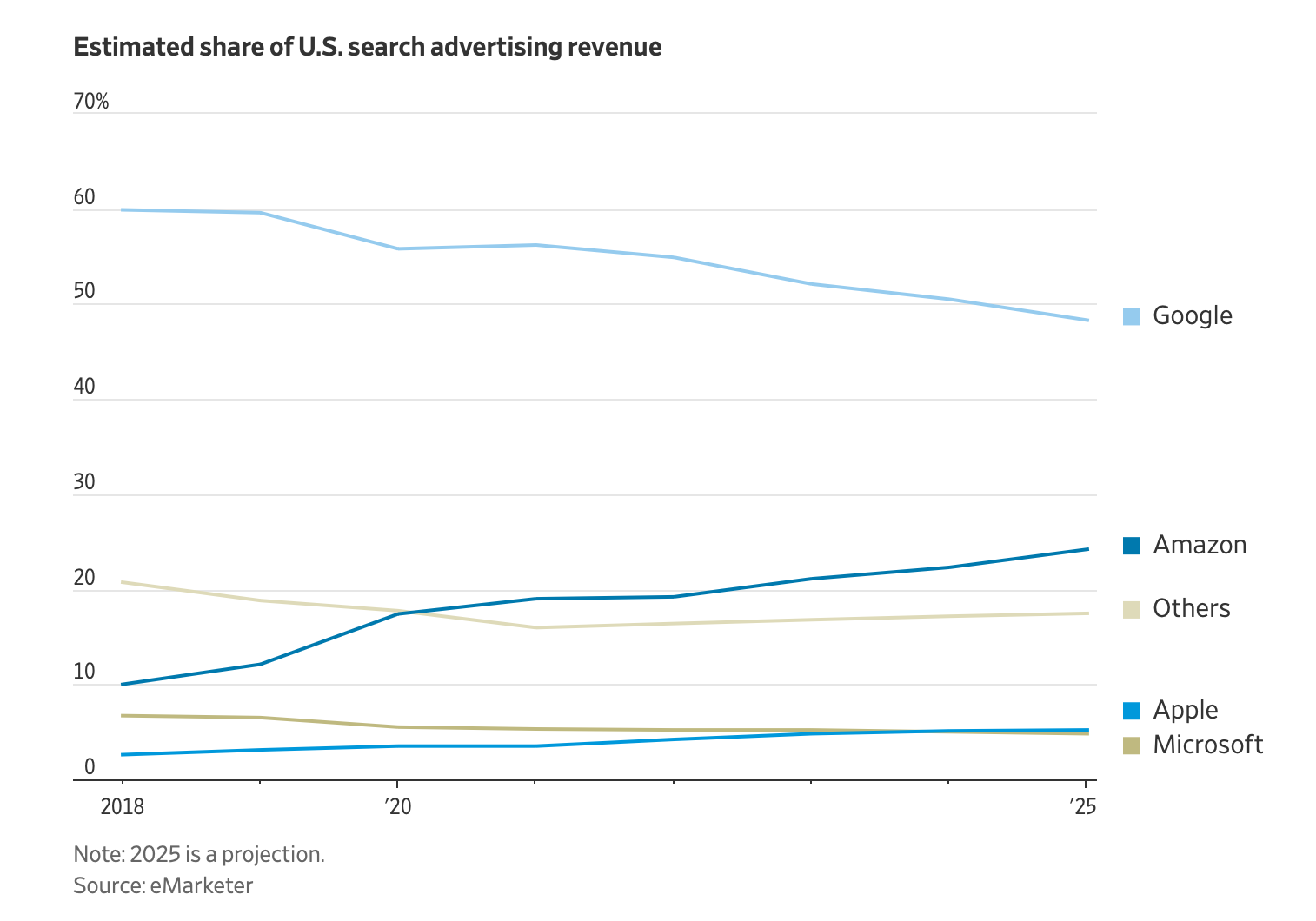
The Wall Street Journal recently published the following chart in a piece about Google’s search dominance being undercut by TikTok and AI. While it is jarring to see Google's share of the US search ad market to drop below 50% in 2025 for the first time, it is important to note that this chart does factor Amazon’s growing search ad business into account, which isn’t typically the case when counting the market share of search engines or search ads. That said, it is definitely time to raise the question: how vulnerable is Google on search?

If you find our insights valuable and would like to have a deeper conversation on technology and media innovations, or need to sound smarter in a client meeting or a pitch, please feel free to reach out to Chelsea Freitas, our VP of Strategy, at chelsea@ipglab.com.
If you liked this edition ofLab Weekly by IPG Media Lab, why not share it?