
Lab Weekly - 09/27/2024
Meta’s latest AR bets; Plus, the latest news on Meta AI, OpenAI, & more must-know stories and cool stats

Want this newsletter in your inbox every week? Sign up for our mailing list here

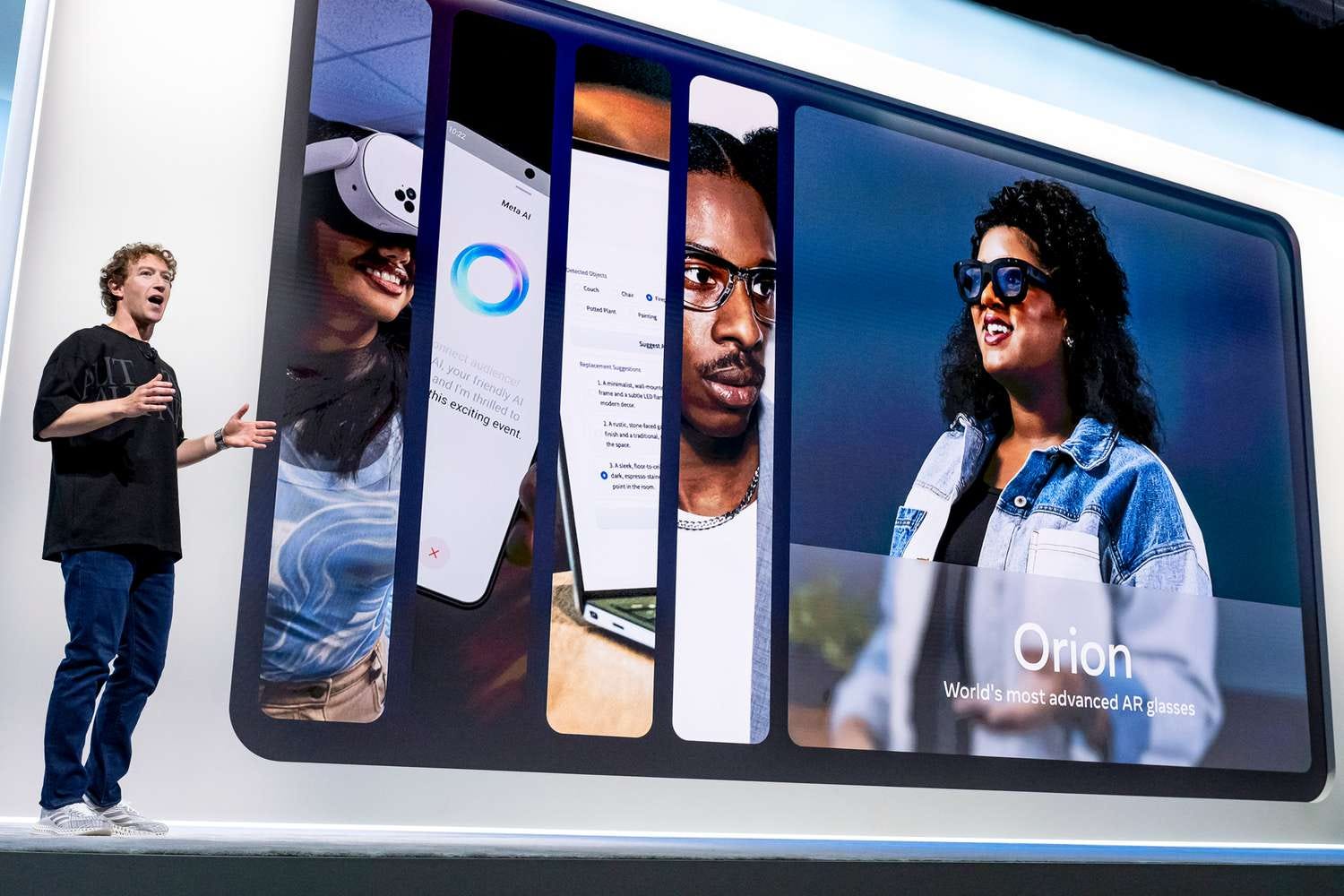
Meta Previews the Future of AR — Here’s What It Means for Brands
Meta maps a clear vision for the post-mobile future; Whether it can pull it off is an entirely different question. Regardless, smart brands should start future-proofing for a post-mobile computing paradigm today.
In case you missed it…
What Brand Marketers Need To Know about Snap Summit 2024
Snap delivered a rousing keynote presentation during its Snap Partner Summit 2024. In under 75 minutes, the company unveiled a simplified app design that boosts creator videos and maximizes ad revenues, integrated a slew of AI-powered creative tools, and offered a promising glimpse into the future of AR glasses with its latest iteration of Snap Spectacles.
What Apple’s New “Visual Intelligence” Means for Brands
Apple announced its latest product updates on Monday via a pre-recorded keynote video. Indeed, despite it being a hardware event, the real star of the show is undoubtedly the set of AI-powered features that Apple is set to unleash with the new iPhone models.
The Crucial Differentiator in the AI Search War
The burgeoning AI search war carries far-ranging implications for the future of the web and digital advertising. Everyone needs the latest news content to keep their AI search engines up-to-date, and access to quality content has become an increasingly important differentiation point.


Meta AI News Round-Up — CNET / TechCrunch / TechCrunch
Besides the mixed reality news covered in the long-form article above, Meta also unveiled a slew of AI updates at the developer event. For starters, Meta unveiled new Llama 3.2 models with multimodal image support, along with smaller models meant to run on phones, which Meta partnered with Arm to work on. The partnership is invested in helping developers support the smaller Llama 3.2 models and rapidly integrate them into their apps.
On the consumer-facing front, Meta plans to start testing AI-generated content in the Facebook and Instagram feeds, bringing us a step closer to synthetic social networks. Meta AI's Imagine features are now expanded across Facebook, Messenger, and Instagram, allowing users to generate AI photos, image captions, and more. Moreover, Meta AI can now speak in recognizable voices that the company licensed from celebrities such as Judi Dench, John Cena, and Awkwafina, whose voice was used for a live demo during the keynote. It is notable that Meta is releasing this multimodal voice AI model right after OpenAI started rolling out the Advanced Voice Mode for ChatGPT (more on this below),
Even more impressive is the creator tools that Meta is supercharging with AI. Meta demonstrated a new tool that will allow creators to create a digital clone of themselves that can chat with fans via video calls. Meta is also piloting a tool to automatically translate voices in Instagram Reels, enabling creators to potentially reach new global audiences across language barriers. Both tools offer a glimpse into a future where creators can leverage AI tools to extend their presence, scale engagement, and reach new audiences in ways previously unimaginable.
Taken together, these new AI features help position Meta as a major player in the rapidly evolving landscape of multimodal AI, blending social interaction with AI-driven content creation and engagement. As brands increasingly look to connect with diverse, multilingual audiences, this AI-powered creative tool offers a seamless way to bridge communication gaps with personalized content.
Related: At Meta Connect, it’s Zuck or nothing [Platformer]; Meta is working on recreating influencers with AI [The Verge]
OpenAI Rolling Out Advanced Voice Mode (AVM) to all ChatGPT Plus Subscribers [TechCrunch]
This enhanced Advanced Voice Mode (AVM) is now made available to all ChatGPT Plus and Teams subscribers this week. It features new voices as well as improved functionality to make AI interactions feel more natural and personalized. This rollout marks a significant leap forward in the evolution of conversational AI, as it aims to create more human-like experiences that are crucial for long-term user adoption of AI assistants.
This release of AVM heralds a future where AI chatbots are increasingly integrated into daily life. For brands, this shift has deep implications, especially when it comes to engaging consumers across different touchpoints. With the ability to create natural, emotionally resonant voice interactions, brands will soon be able to craft more personalized and engaging experiences through AI voice assistants, customer support solutions, or even interactive product demos. To prepare for that multimodal AI future, brands can start by considering how to best position your content and products for voice discovery.
Related: Google’s NotebookLLM introduces an Audio Overview feature can turn documents, slides, charts and more into podcast-style discussions [Google Blog]
TikTok Revamps Search Ad Platform By Launching Keyword Controls [AdAge]
Social media has increasingly become a search destination for users, especially those of the younger generation. According to a 2024 survey by Forbes Advisor and Talker Research, 46% of Generation Z and 35% of millennials prefer social media over traditional search engines. So it makes sense that TikTok is now updating its ad offering so brands can bid on keywords, acting more like the kind of traditional, SEO-based search marketing that Google dominates.
With this new ad product, TikTok now allows brands to appear in search results, which already included ads, but their placement wasn’t keyword-based. Now, brands will be able to align their ads with the different search behaviors of TikTok users in order to maximize the impact of their ads. TikTok’s own study found that advertisers that run Search Ads in addition to In-Feed Ads see a 20% increase in conversions on average.
Dropping this right ahead of the holiday shopping season indicates that TikTok is eager to capitalize on the impending surge in people searching for holiday gifts while brands ramp up their marketing efforts to capture their attention. While it is unlikely to directly challenge Google’s dominance on search marketing, TiKTok’s latest move reflects the growing importance of social commerce, particularly for younger generations turning to apps like TikTok primarily for entertainment but also open to product recommendations and inspirations.
Related: Perplexity in talks with top brands on ads model as it challenges Google [Financial Times]; Google will begin flagging AI-generated images in Search later this year [TechCrunch]; Reddit launches AI-powered tools to boost ad creation [Search Engine Land]
Situational Awareness:
NYT To Sell Audio Subscriptions Through Apple and Spotify [Axios]
It’s interesting how Apple is quietly turning the back catalog of popular podcasts into paid subscriptions, especially considering its native podcast player has been losing market share. It is also indicative of the larger monetization issues facing the podcast industry, and turning to subscription pay walls as an additional revenue stream makes sense.
Disney officially launches password-sharing crackdown with paid sharing program [THR]
Disney is making good on its promise to crack down on password sharing. Now Disney+ users are presented with the option of adding an “Extra Member” for $6.99/month for the ad-supported tier, or $9.99 for the ad-free tier. Considering how well the password crackdown worked for Netflix, it’s no surprise that Disney is doing it too.
LG rolls out full-screen screensaver ads to its smart TVs [FlatpanelsHD]
This feature is on by default, including the premium.OLED models, but it can be disabled. The ads are reportedly supplied by LG itself and its partners. With ads becoming increasingly inescapable on smart TVs and streaming set top boxes, Apple TV stands out as the only ad-free streaming device, give or take the way its UI aggressively pushes Apple TV+ content.
WBD partners with Google for AI-generated captions on Max [CNBC]
Hats off to the Max team for rolling out a true value-add feature powered by generative AI. Honestly, I’m surprised that Max is the first streaming service outside of YouTube to do this. But hopefully, the substiles are being overseen by human moderators to avoid potential mistakes.

AI summaries gaining traction among search users. Last week, The Information reported the survey results of its 1,088 subscribers they surveyed and said that 77% said they are using traditional search engines like Google because of generative Al products. Of course, the tech-savvy readership of The Information is not representative of the general public, but as early adopters, this group is indicative of the next wave of adoption.
A new PYMNTS Intelligence report revealed that 36% of 18-24-year-olds would select non-bank services for online payments rather than relying on their traditional bank. And over 75% of consumers overall have said they would think about changing financial institutions for better services, a rise from just 52% three years ago.
Amazon’s decision to introduce ads within its Prime Video streaming service is already paying off. The Information reports that, following the upfronts, Amazon has exceeded its goal of drawing $1.8 billion in ad-spending commitments for its video-streaming services, including Prime Video. That figure includes ads on Amazon’s live sports telecasts, such as the NFL’s Thursday Night Football games.

If you find our insights valuable and would like to have a deeper conversation on technology and media innovations, or need to sound smarter in a client meeting or a pitch, please feel free to reach out to Chelsea Freitas, our VP of Strategy, at chelsea@ipglab.com.
If you liked this edition of Lab Weekly by IPG Media Lab, why not share it?