
Lab Weekly - 09/13/2024
Apple event recap; New podcast episode; Plus, the latest news on OpenAI's buzzy new model, Charter x Max, Roblox x Shopify, & more must-know stories and cool stats

Want this newsletter in your inbox every week? Sign up for our mailing list here

What Apple’s New “Visual Intelligence” Means for Brands
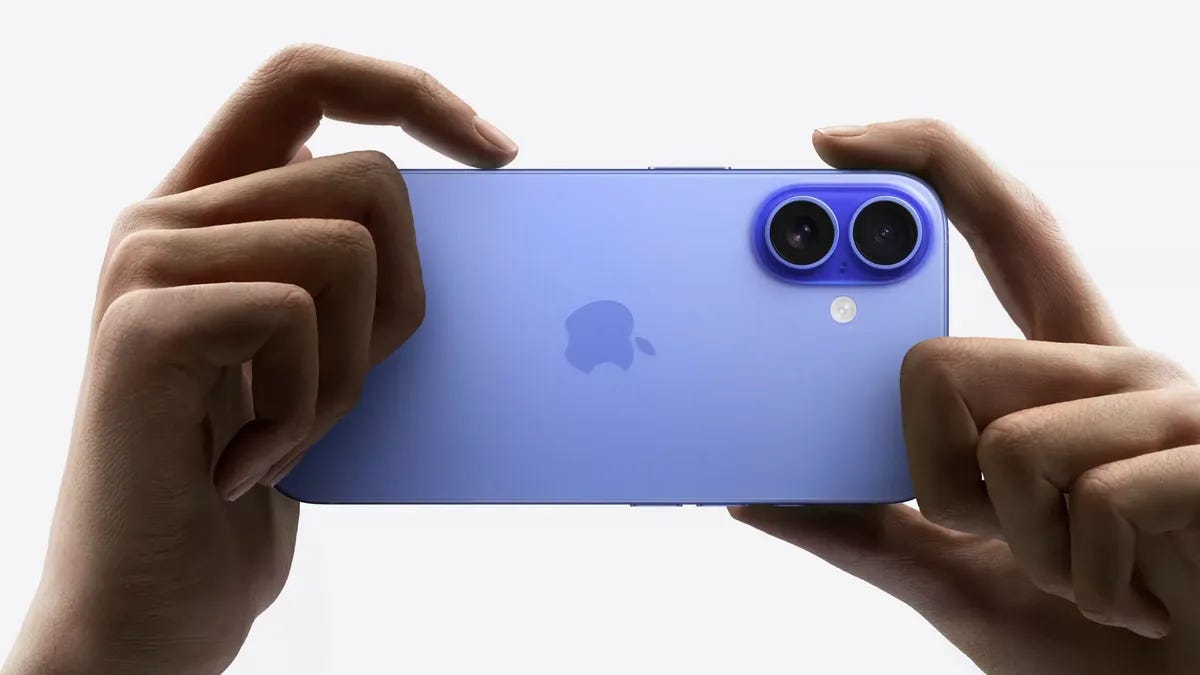
Apple announced its latest product updates on Monday via a pre-recorded keynote video. Indeed, despite it being a hardware event, the real star of the show is undoubtedly the set of AI-powered features that Apple is set to unleash with the new iPhone models this fall, especially the visual intelligence features that will usher in a new era for visual search as a brand touchpoint and potential marketing channel.
In case you missed it…
The Future of Real Estate
As people have adapted to new ways of living in this post-COVID era, their expectations and preferences for housing have also evolved. In tandem with broader economic changes, such as the end of Zero Interest Rate Policies (ZIRP) and shifts in mortgage rates, these evolving consumer trends are driving significant changes in the real estate market.
The Crucial Differentiator in the AI Search War
The burgeoning AI search war carries far-ranging implications for the future of the web and digital advertising. Everyone needs the latest news content to keep their AI search engines up-to-date, and access to quality content has become an increasingly important differentiation point.
Apple Intelligence Could Usher In A New Era For Ai
In this article published on The Drum, Adam Simon (managing director at IPG Media Lab) outlines the way digital advertisers must adapt by integrating with AI ecosystems, enhancing personalization, optimizing for voice search, and building brand loyalty to avoid disintermediation from traditional touchpoints as AI assistants like Apple Intelligence gain prominence.

Episode 162: Apple’s New “Visual Intelligence” & More
Welcome back to another episode of Floor 9. This week, Tom Trudeau from our partnerships team chats with our managing director Adam Simon about everything that marketers should know coming out of the Apple event on Monday. Together, they discussed various new Apple products, the upcoming Apple Intelligence features, as well as these AI-driven features will change consumer expectations and reshape brand interactions.
If you enjoyed the episode, please consider giving us a five-star review on Apple Podcast. Follow the Lab on LinkedIn and on Medium for our latest insights. Thanks for listening!

OpenAI Releases GPT-o1, Its First Model With ‘Reasoning’ Abilities [The Verge]
OpneAI’s long-rumored “reasoning” AI model is here. It is codenamed “Strawberry” because large language models famously fail to count how many “r’s” are in the word “strawberry.” As the name suggests, this new o1 model has been trained to answer more complex questions, faster than a human can, particularly in terms of questions that require multi-step logical reasoning. It’s being released alongside o1-mini, a smaller, cheaper version.
While ChatGPT has recently surpassed 11 million paying customers, OpenAI is clearly looking to strike while the iron is hot, especially as it looks to raise more funding at an eye-popping $150 billion valuation. Cracking reasoning is indeed considered a critical next step toward achieving human-level intelligence in AI. Current AI models, such as large language models (LLMs), excel at pattern recognition but still struggle with complex reasoning tasks. For now, however, the early consensus seems to be that o1’s reasoning abilities are relatively slow and rudimentary. Plus OpenAI is charging developers a high premium to use it, so we’re unlikely to see many third-party apps or functions built on it in the same way that LLMs have been.
Related: Gemini Live is beginning its rollout to free Android users [9to5Google]; OpenAI claims that in a qualifying exam for the International Mathematics Olympiad, o1 correctly solved 83% of the problems, while GPT-4o solved only 13% [TechCrunch]
Charter Adds Warner Bros Discovery's Streaming Service At No Extra Charge [Reuters]
Charter, the largest pay TV provider in the U.S., has announced a new “multi-year” carriage deal with Warner Bros Discovery (WBD) that will make an ad-supported version of Max, which includes all HBO and Discovery+ content, available to all Spectrum TV Select packages at no additional cost to Charter customers.
With Max’s addition, Charter has now almost effectively re-assembled a big cable TV bundle, with Paramount+ (minus the Showtime content), Disney+, AMC+, BET+, VIX and now Max’s are now all free for its cable TV subscribers. (With the Comcast-owned Peacock and Disney’s Hulu being the two glaring but understandable exceptions.) Of course, all these streaming services are available as ad-supported tiers, so those Carter customers are still going to watch a considerable amount of ads, regardless of what they watch.
This deal is representative of the current state of the streaming market, where lines between traditional cable providers and streaming services are increasingly blurred. As consumers have fragmented their viewing habits across multiple platforms, cable companies like Charter are seeking ways to retain subscribers by integrating popular streaming services into their offerings. As the streaming landscape continues to evolve, partnerships between cable providers and streaming services may become increasingly common, aiming to offer comprehensive entertainment solutions in a highly competitive market.
Related: Netflix, Google team to bring shoppable integration to ‘Emily in Paris’ [Marketing Dive]; Comcast Introduces Peacock, Netflix and Apple TV+ Streaming Bundle [Vulture]
Roblox, Shopify Partner To Sell Physical Products In The Metaverse [Retail Dive]
Roblox has tapped Shopify to be the platform’s first commerce integration partner to introduce Shopify Checkout in Roblox as a pilot program. This partnership gives Shopify merchants access to Roblox’s 80 million daily active users, while also offering creators a new revenue stream by allowing them to sell products within immersive virtual environments.
Previously, Roblox has already experimented with shopping by partnering with brands like E.l.f. Cosmetics, Fandango, Walmart, and Warner Bros., allowing players 13 years or older to discover and purchase physical products. By enabling brands to sell products directly within the platform, Roblox evolves from a gaming space into a commerce-enabled metaverse, potentially attracting more brands and creators who see the platform as an emerging sales channel.
Having a robust creator economy will be crucial to the development of proto-metaverse platforms like Roblox, which smartly has been a platform that strongly encourages user-generated content and entrepreneurship. Creators can design their own games and virtual items, monetizing them through in-game purchases like virtual goods, game passes, and now, physical products.
Related: Roblox plans a generative AI tool to let creators make 3D scenes using text prompts, and announces new social features [TechCrunch]; Roblox will start sharing more revenue with creators [The Verge]
Situational Awareness:
The FDA approves the Hearing Aid Feature in AirPods Pro 2 [TechCrunch]
Well, that was quick — Apple said on Monday during its keynote event that this hearing aid feature was still being approved by the FDA, and viola, here it is already. CNBC has an interesting analysis on how this new feature could change the hearing aid industry, where most devices range from $799 into the thousands of dollars.
Spotify looks to pay video creators to put shows on platform [Bloomberg]
Spotify is reportedly trying to entice video-oriented creators to distribute shows on the platform in addition to YouTube, sometimes offering them seven figures. This move aligns with the continued rise of video podcasts, and reflects the engagement-oriented state of the audio industry.
Adobe previews Firefly's new AI-enhanced 'Video Model' for on-demand clip creation [CNET]
It’s noteworthy that Adobe is carefully positioning this new video model as a supporting tool for creators, in contrast to, say, OpenAI’s Sora, which aspires to generate short films. Adobe is also quick to mention that its AI is "commercially safe," as it was trained on either "public domain or licensed content -- never user content."
Sony announces the PS5 Pro, available from November 7 for $700 [CNET]
This new PlayStation model promises to offer a better GPU and faster memory for up to 45% faster game rendering. However, it does not come with a disc drive, although a standalone disc drive could be purchased separately. It seems that Sony is testing the waters for going all-digital for the next-gen PlayStation.

The Presidential Debate on Tuesday got 67.1 million viewers across 8 networks, per Nielsen tracking. ABC said an additional 7.4 million viewers streamed it on Disney+ and Hulu, putting the total up to 74.5 million.
“Thursday Night Football” returns to Amazon Prime Video this week, and more than 50 first-time advertisers will be part of the season, AdAge reports. Top new sponsors now include Verizon, State Farm, and Subway.
Americans spent more time watching YouTube on their TV sets in July than all of the networks and streaming services owned by Walt Disney, according to Nielsen. Time spent watching YouTube was up 7% compared to June, resulting in a record total share of 10.4% of TV usage.

If you find our insights valuable and would like to have a deeper conversation on technology and media innovations, or need to sound smarter in a client meeting or a pitch, please feel free to reach out to Chelsea Freitas, our VP of Strategy, at chelsea@ipglab.com.
If you liked this edition of Lab Weekly by IPG Media Lab, why not share it?