
Lab Weekly - 07/26/2024
Decoding “brat summer”; New Floor 9 episode; Plus, the latest news about new AI model from Meta, Microsoft’s AI search, and some cool stats

Want this newsletter in your inbox every week? Sign up for our mailing list here

The Rise and Fall of a “Brat Summer”
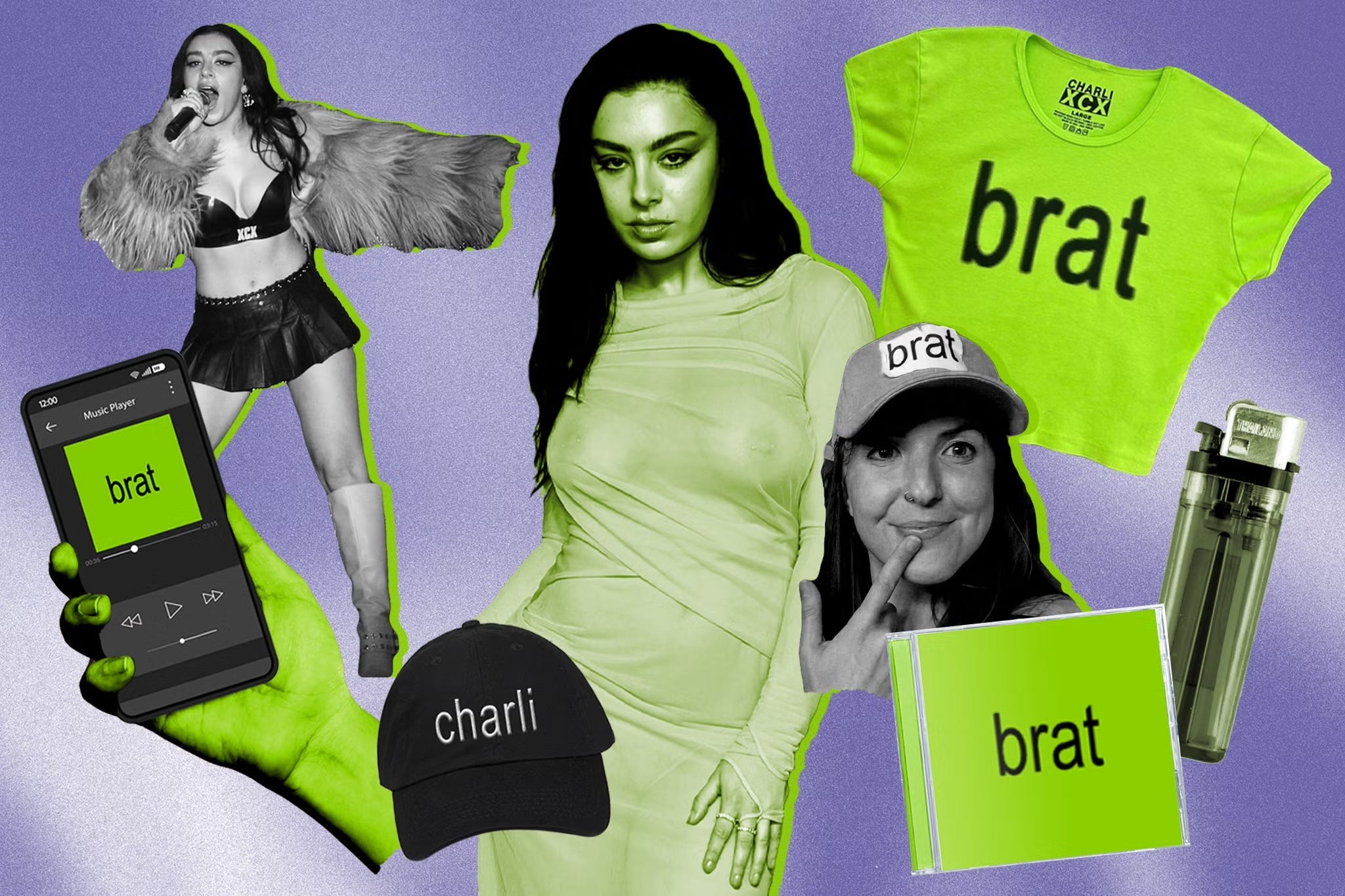
Last week, the “brat summer” memes breached barriers of its chronically online niche and crossed over into the mainstream news cycle, thanks to Vice President Kamala Harris embracing the memes as she launched her presidential bid, prompting some to declare that brat summer is over. What is brat summer? Why is it having such a cultural moment? And what brands can learn from its rise and fall?
In case you missed it…
Decoding the Ongoing “Vibecession” & Spreading Financial Anxiety
Despite job growth and rising wages, financial anxiety looms large for many U.S. consumers, negatively coloring an individual’s outlook on the economy and impacting consumer behavior. While conventional metrics for macroeconomic health are looking good, prevailing challenges in housing affordability and inflation’s lingering effects continue to stoke economic pessimism.
What’s Next for the Entertainment Industry?
This summer has been one of turmoil and reorganization for the entertainment industry. Still recovering from the historical double-strikes last summer, the industry is trying to realign its streaming-led business model with the post-streaming-wars market reality. The streaming services are all in on ads, but Hollywood needs to look both outward and inward to find its future.
Social Media At a Crossroads of Cultural Backlash & Generative AI
Social media has been in flux for a while, with major social platforms from Twitter to TikTok were confronting existential-level threats while bracing for the impact that generative AI promised to unleash. This year, however, social media companies have a new formidable challenge to overcome: convincing parents that they are not bad for kids. Could generative AI be the savior or its downfall? Let’s take a closer look at social media at a crossroads.

Episode 159: What’s Next for Hollywood
This month on Floor 9, the Lab team assembles for a panel discussion on the future of the entertainment industry. Faced with rising streaming fatigue, high-churn “nomadic subscribers,” and the looming threat of AI-generated “slop content,” Hollywood needs to be smart about navigating the post-streaming-wars market reality. In this episode, host Ryan Miller is joined by Chelsea Freitas, Tom Trudeau, and Richard Yao to break down the various issues facing the entertainment industry today and point to the best practices going forward. Listen now!
If you enjoyed the episode, please consider giving us a five-star review on Apple Podcast. Follow the Lab on LinkedIn and on Medium for our latest insights. Thanks for listening!

Meta Releases the Biggest and Best Open-Source AI Model Yet [The Verge]
Meta has released Llama 3.1, featuring a groundbreaking 405-billion parameter model, the largest open-source language model to date. Meta touts that this latest Llama model outperforms top closed models like GPT-4 Omni and Claude 3.5 Sonnet in several benchmarks, with strengths in multilingual abilities, code generation, and complex reasoning.
This release indicates a narrowing gap between open-source and closed-source models, suggesting a convergence in quality among major AI developers. This explains the motivation behind Meta’s pursuit of “open source” AI models, which stands in contrast to competitors like OpenAI and Google, who maintain closed models as their primary business offering. By open-sourcing such a powerful AI model, Meta not only accelerates the commodification of the LLMs, it also positions itself to potentially disrupt competitors, similar to how free-to-use Google Docs challenged the subscription-based Microsoft's Office 365, and circumvent the intensifying regulatory scrutiny around AI companies.
Related: Meta AI gets new ‘Imagine me’ selfie feature [TechCrunch]; OpenAI CEO Sam Altman published an op-ed calling for an AI coalition [The Washington Post]
Microsoft Unveils Bing Generative Search [ZDNet]
Microsoft has introduced an update to Bing's web searches, featuring AI-powered answers that enhance the search results. The updated search results page will display a comprehensive AI-generated response, followed by a list of curated sources from which the AI derived its answer. Traditional search results will also be present, displayed in a sidebar on the right side of the page. This new feature is currently accessible to a limited test group of users.
In contrast to Google's approach with AI Overviews, which integrates AI-generated summaries atop the traditional search results, Micosort’s approach prominently features the AI search results, with clear citations of information sources, while pushing the traditional search results into a sidebar. By visually prioritizing the generative search results, Microsoft is making a statement that seeks to differentiate Bing from Google furthermore. At the same time, this UX layout addresses a popular complaint about Google's AI overviews at the top of Search results, causing users to scroll more to get to the results they want.
Related: OpenAI announced SearchGPT, its first foray into the AI search engine market [The Verge]; Training LLMs on AI-generated content might lead to “model collapse,” researchers found [Financial Times]
Google Is Keeping Cookies in Chrome After All [WSJ]
After four years of fights with advertisers and regulators, as well as delays in rolling out an alternative, Google has officially reversed its plan to eliminate third-party cookies in its Chrome browser. Rather than depreciating them, Google plans to “introduce a new experience in Chrome that lets people make an informed choice that applies across their web browsing.”
The search giant launched its “Privacy Sandbox” initiative in 2019 to find a solution that protects user privacy while still allowing content to remain freely available on the open web, initially targeting an early 2022 launch of the so-called “Federated Learning of Cohorts” as an alternative to third-party cookies.
Despite the reversal, privacy concerns and regulatory pressures remain. While Google's decision provides temporary relief, marketers should view this as an opportunity to balance existing targeting and measurement tactics with proactive preparation for a more privacy-focused future. Continuing to invest in first-party data collection, exploring alternative targeting methods, and staying informed about Privacy Sandbox developments will be crucial for the long-term success for digital advertisers.
Related: The Privacy Sandbox has always been a farce [AdWeek]; Marketers urged to prepare for ‘low-cookie world’ as Google abandons plans to deprecate third-party cookies [Marketing Week]
Situational Awareness:
Prime Video Updates App to Improve User Experience [Deadline]
Hopefully with this UI update, our parents will no longer get too confused about which movies they can watch for free, which they need to pay an additional subscription fee to access, and which they need to pay for VOD rental while browsing for stuff to watch on Prime Video.
Openvibe combines Mastodon, Bluesky and Nostr into one social app [TechCrunch]
Finally, an aggregator of all the emerging decentralized social apps! While it might sound counterintuitive to the principle of decentralization, Openvibe could serve as a bridge to make these platforms more accessible and user-friendly, potentially driving wider adoption of decentralized social networking.
Credit card companies are turning to the gaming sector to advertise and finding growth [WSJ]
Video games offer a great way to reach younger generations, who have turned to cards later in life than prior generations, per WSJ. And Yes, there is an Xbox-branded Mastercard that offers bonus points for Microsoft Store purchases and three-month free access of Xbox Game Pass.
Google tests out Gemini AI-created video presentations [The Verge]
The future of work might soon involve guessing whether a presentation you just watched is live-action, pre-recorded, or AI-generated. Hint: if it sounds painfully generic and devoid of personality, it’s probably AI.
‘Skibidi Toilet’ film and tv franchise in the works from Michael Bay [Variety]
Gen Alpha humor works in mysterious ways, and who better to turn a talking toilet fighting with cyborgs into a cinematic spectacle than the director who helmed The Transformer franchise?

The prices for the Disney+, Hulu and Max streaming bundle have been revealed: $16.99 a month with ads, and $29.99 a month without ads, the Hollywood Reporter reports. The bundle was announced back in May, marking a major team-up from streaming competitors.
After a rough year, podcasts begin to grow again, Bloomberg reports. We can see the industry’s rebound in any number of ways. For one, several publicly traded companies have seen their podcast ad sales tick up. During the first quarter of this year, IHeartMedia Inc. reported 18% YoY growth in its podcast revenue. Meanwhile, Acast AB said revenue grew 25% YoY during its first quarter of 2024.
Delta was the domestic carrier hit most heavily by the CrowdStrike outage last Friday, according to FlightAware. The airline canceled 32% of its flights on Friday and 36% on Sunday. As of Monday afternoon, Delta had canceled 817 flights, 22% of its scheduled routes, according to the flight tracking service.

If you find our insights valuable and would like to have a deeper conversation on technology and media innovations, or need to sound smarter in a client meeting or a pitch, please feel free to reach out to Chelsea Freitas, our VP of Strategy, at chelsea@ipglab.com.
If you liked this edition of Lab Weekly by IPG Media Lab, why not share it?