
Lab Weekly - 02/14/2025
Super Bowl ad trends; New Floor 9 episode; Plus, the latest news on the OpenAI, YouTube’s AI tools,, and more

Want this newsletter in your inbox every week? Sign up for our mailing list here

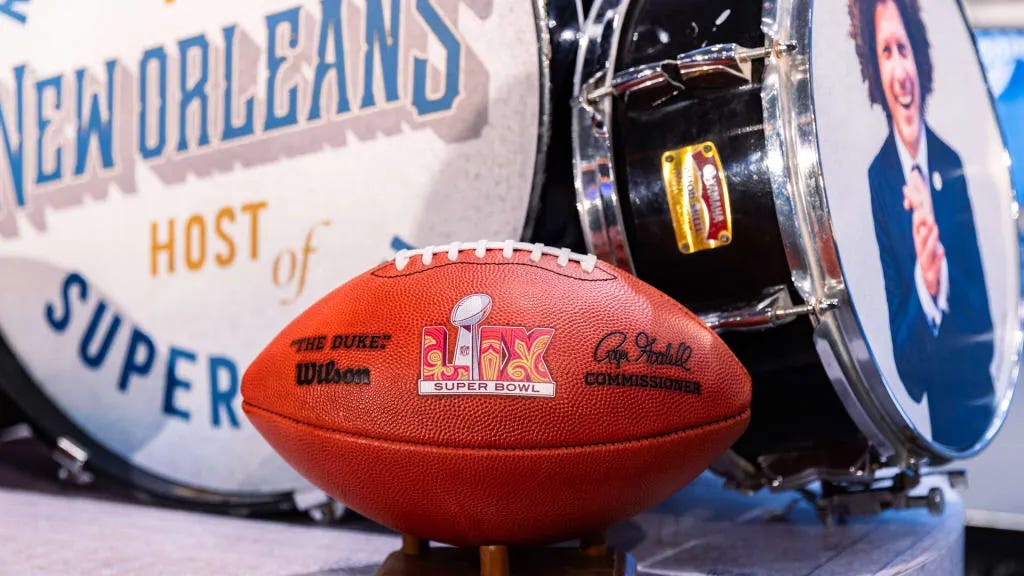
Brand Takeaways from the 2025 Super Bowl Ads
From the consumer AI products, to the rise of women’s sports, to balancing Gen Z humor with nostalgia, here are four interesting trends gleaned from this year’s crop of Super Bowl ads that collectively reflect the current technology and media landscape.
In case you missed it…
Closing the “De Minimis” Loophole: What It Means for the Ecommerce Players
The ecommerce landscape faces a major shake-up that could impact retailers large and small.
DeepSeek Lessons for Brand Marketers
Three key takeaways from the brouhaha surrounding the new AI challenger

Episode 167: 2025 Outlook Trends
Welcome back to Floor 9. As usual, we kicked off the year with an Outlook report to forecast some emerging trends in media and consumer behavior that we think will be crucial to brand strategy in 2025 and beyond. In this episode, your host Ryan is joined by Adam Simon, the Lab’s managing director and the author of the Outlook, and Chelsea Freitas, SVP of the Lab’s Strategy team, to take a deep dive into the key trends outlined in this report.
Titled “Ports in a Storm,” this year’s Outlook is centered around the idea that consumers are increasingly seeking out “havens” in the face of an increasingly chaotic and stressful world. Together, the team discusses the rise of post-text, hyper-personalized media diets, the reshuffling of social media audiences, the impulse-driven consumer behaviors, the deployment phase of AI, and the opportunities and challenges they bring for brands.
For deeper insights into the discussion, you can also read the full 2025 Outlook report on our Medium blog: https://bit.ly/IPGLabOutlook2025
If you enjoyed the episode, please consider giving us a five-star review on Apple Podcast. Follow the Lab on LinkedIn and on Medium for our latest insights. Thanks for listening!

OpenAI's Sam Altman Rejects Elon Musk's $97.4 Billion Buyout Offer [Variety]
On Monday, Musk and a consortium of investors offered $97.4 billion to buy the nonprofit that controls OpenAI, as reported by the Wall Street Journal, and OpenAI CEO Sam Altman promptly rejected the bid with a post on X.
This bid complicates OpenAI’s ongoing efforts to transition from the original non-profit organization to a for-profit entity. So far, OpenAI's board has reportedly not received Musk's takeover bid, and Musk has said that he would withdraw the bid if the ChatGPT maker remains a nonprofit. The outcome of this bid could shake up the ongoing AI arms race, impact OpenAI’s strategic decisions, and thus calls for further monitoring.
Related: OpenAI explores advertising as it steps up revenue drive [Financial Times]; OpenAI is finalizing its first in-house chip's design and plans to send it for fabrication at TSMC [Reuters]; Thomson Reuters wins first major AI copyright case in the US [Wired]
YouTube Shorts Adds Veo 2 So Creators Can Make GenAI Videos [TechCrunch]
AI’s deployment phase continues as AI-enabled tools continue to proliferate across major creator-led platforms. YouTube Shorts is integrating with Google DeepMind's latest video AI model, Veo 2, allowing creators to generate AI video clips for their posts. It will be interesting to see what percentage of YouTube creators will opt to use generative AI and who will choose to ignore it.
As part of this AI update, YouTube will also expand AI auto dubbing to all Partner Program creators in February, and use machine learning to estimate users' ages for age-appropriate content. While these AI features tend to get less ink in the press, they nevertheless constitute an important part of the AI rollout.
TV is now the primary device for YouTube viewing in the U.S. YouTube CEO Neal Mohan shared in an annual letter to investors that more U.S. consumers are watching YouTube on TV sets than any other device, at least in the U.S. citing Nielsen data. In particular, viewers are watching, on average, over 1 billion hours of YouTube content on TVs daily.
Related: YouTube Shorts’ Dream Screen feature can now generate AI video backgrounds [TechCrunch]; CBS and other Paramount channels to disappear from YouTube TV amid contract dispute [CBS News]
The “Apple TV” App Is Now Available On Android [9to5Mac]
The Apple TV app is finally available in the Google Play Store for Android users worldwide, bringing Apple’s original content and MLS games to a wider audience. An Apple TV+ app is already available for Android TV, but this expansion will make the app available on Android phones and tablets, too.
Apple has historically prioritized its own ecosystem, leveraging exclusive software and content to drive hardware sales. But, in order for Apple TV+ to continue to grow its subscriber base, bringing the Apple TV app on Android makes sense, as it removes barriers for millions of potential subscribers and further drives services revenue growth, which is becoming increasingly important for Apple.
In addition, one could also argue that Apple finally decided to expand the access to Apple TV in order to maximize the global reach of its exclusive MLS Season Pass, especially among soccer fans on Android devices. There’s also the lingering antitrust concerns from the EU, which has repeatedly challenged Apple’s closed ecosystem, and this move could further help Apple argue against that.
Related: Tim Cook teases a new Apple launch next week, and it’s probably the iPhone SE [The Verge]; Amazon revamps Prime Video’s Apple TV app [The Verge]
Situational Awareness:
Apple debuts Powerbeats Pro 2 with heart rate monitoring and more [MacRumors]
The heart rate monitoring feature is notable here for it is the first time an Apple audio product has supported it. Obviously, the feature has been available for Apple Watch and other non-Apple wrist-wearables for a while, but it is still surprising to see it pop up here first, given that typically Apple tends to reserve the flashier new features for AirPods Pro, its flagship earbud product.
Tumblr to join the fediverse after WordPress migration completes [TechCrunch]
The decentralized network of social platforms continues to grow as Tumblr, now owned by Automatic (which also owns WordPress), is set to join the fediverse — the open social web powered by the ActivityPub protocol also used by Mastodon, Threads, Flipboard, and others. Notably, that is a different protocol from the AT Protocol, which powers Bluesky.
Lyft eyes robotaxi launch in 2026 [The Verge]
Lyft says it will launch a fleet of robotaxis, using Intel's Mobileye self-driving tech, in Dallas “as soon as 2026”, and scale to “thousands” in more markets. While this trails behind Uber’s robotaxi rollout, courtesy of its partnership with Waymo, we are still in the early stages of development for autonomous vehicles, and Lyft is certainly joining the race as well.
Away unveils 'White Lotus' luggage collab [The Points Guy]
Dropping this collaboration right before the new season premiere of the hit HBO show is a great extension of the growing “set-jetting” trend, where entertainment IP influences travel decisions. Attaching your luggage products to a show set in a luxury hotel chain is also a cool way to elevate your brand.

A declining portion of US consumers have the emergency savings necessary to cover a major unexpected expense, per Bankrate’s 2025 Emergency Savings Report. Only 41% of Americans would use savings to cover a major unexpected expense, down from 44% in 2024. Instead, 43% would borrow money, with 25% opting to use a credit card and pay it off over time, up from 21% in 2024.
Analysis of credit and debit card data by Bloomberg reveals that the recent trade policy changes have impacted the sales of some Chinese-origin ecommerce apps: Shein's US sales fell 16% to 41% for five days from February 5, and Temu fell up to 32% in the same time period.
AI chatbots struggle with factual inaccuracies and distortions when summarizing news stories, The Verge reports, citing research from the BBC. The study, which examined whether OpenAI’s ChatGPT, Google Gemini, Microsoft Copilot, and Perplexity can accurately summarize news, found more than 50% of all the AI-generated output had “significant issues of some form.”

If you find our insights valuable and would like to have a deeper conversation on technology and media innovations, or need to sound smarter in a client meeting or a pitch, please feel free to reach out to Chelsea Freitas, our VP of Strategy, at chelsea@ipglab.com.
If you liked this edition of Lab Weekly by IPG Media Lab, why not share it?